data centres
Data centres are being built faster than any other class of critical infrastructure. The systems that make them reliable are the same systems that introduce gas risk: battery backup, mechanical cooling, standby generation, electrical distribution and gaseous suppression.
These are sealed, low-occupancy buildings engineered to keep air exactly where it is put, which is precisely what makes a leak dangerous. From UPS halls to chiller plant, Crowcon’s fixed and portable detection protects the people who open these rooms and the continuity of the service behind them.
GAS HAZARDS IN DATA CENTRES
Detection designed for a whole building protects none of it properly. Each space in a data centre has its own gas, its own accumulation behaviour and its own correct mounting height.
download brochure
UPS and battery rooms
Primary gases: H₂, lithium-ion off-gas (DMC, EMC, VOCs), CO, HF
Lead-acid and NiCd batteries on charge release hydrogen (H₂) continuously, and hydrogen is explosive from 4% by volume in rooms full of switchgear, busbars and DC connections. A lithium-ion cell driven into thermal runaway vents electrolyte carbonates, carbon monoxide (CO) and hydrogen fluoride (HF) within minutes. Most published incidents happened during replacement or relocation work, when ventilation was isolated but gassing continued. Hydrogen rises, so detection belongs at or near ceiling level, above the banks and away from supply air, interlocked to extract.
GAS HAZARDS IN DATA CENTRES
Detection designed for a whole building protects none of it properly. Each space in a data centre has its own gas, its own accumulation behaviour and its own correct mounting height.
download brochure
BESS & energy storage
Primary gases: lithium-ion off-gas, H₂, CO, HF
Co-located battery energy storage brings utility-scale lithium-ion inside the fence line. A stressed cell vents dimethyl carbonate and other electrolyte vapours before there is any smoke, heat or flame, followed by hydrogen (H₂), carbon monoxide (CO) and hydrogen fluoride (HF) as it fails. Off-gas detection is therefore the earliest warning of thermal runaway available. The 2026 edition of NFPA 855 no longer accepts passive venting alone, expecting detection interlocked to exhaust and concentration held below 25% LFL, with the alarm routed to a manned position.
GAS HAZARDS IN DATA CENTRES
Detection designed for a whole building protects none of it properly. Each space in a data centre has its own gas, its own accumulation behaviour and its own correct mounting height.
download brochure
Chiller & mechanical plant
Primary gases: refrigerants (R410A, R32, R454B, R134a, R-1234ze), CO₂, NH₃, propane, O₂ depletion
Mechanical plant holds the largest gas inventory on most sites: refrigerant charges of R410A, R32, R454B, R134a, R-1234ze, CO₂ or propane spread across chillers, compressors, condensers and pipework, with hundreds of joints and fittings. Most are heavier than air, so a leak sinks into plant rooms, pits and plenums, displacing oxygen (O₂) and taking cooling capacity with it. Newer blends add mild flammability, and industrial chillers may hold ammonia (NH₃), toxic and corrosive, whose smell stops warning anyone within minutes. Detection sits low, near compressors and likely leak points, with the readout outside the room.
GAS HAZARDS IN DATA CENTRES
Detection designed for a whole building protects none of it properly. Each space in a data centre has its own gas, its own accumulation behaviour and its own correct mounting height.
download brochure
Generator halls & fuel storage
Primary gases: CO, NO₂, fuel vapour
Standby generators produce carbon monoxide (CO) and nitrogen dioxide (NO₂) whenever they run, and load bank or black start testing runs them deliberately, at length, usually when fewest people are on site. Both are dangerous at low concentration: EH40 sets 20 ppm for CO over eight hours and just 0.5 ppm for NO₂. Enclosed halls restrict dispersion, and exhaust has repeatedly re-entered buildings through air intakes. Adjacent bulk fuel adds flammable vapour. Detection belongs at breathing height near the units, exhaust routes and intakes, with flame detection covering the fuel yard.
GAS HAZARDS IN DATA CENTRES
Detection designed for a whole building protects none of it properly. Each space in a data centre has its own gas, its own accumulation behaviour and its own correct mounting height.
download brochure
Data halls & underfloor voids
Primary gases: refrigerants, coolant vapour, CO₂, O₂ depletion
Cooling now sits in the same volume as the compute. In-row coolers, CRAC and CRAH units, coolant distribution units and liquid cooling pipework put refrigerant and coolant vapour alongside the racks, and liquid cooling passed half of all new high-performance deployments in early 2026. Every make and break of a coupling is a release point. Refrigerants and CO₂ are dense, so raised floors, plenums and cable voids become accumulation points where oxygen (O₂) can be displaced. Detection sits low, positioned by containment and airflow rather than a drawing grid.
GAS HAZARDS IN DATA CENTRES
Detection designed for a whole building protects none of it properly. Each space in a data centre has its own gas, its own accumulation behaviour and its own correct mounting height.
download brochure
Switch rooms & suppression zones
Primary gases: SF₆, CO₂, O₂ depletion
High-voltage switchgear insulated with sulphur hexafluoride (SF₆) can leak steadily or fail suddenly. SF₆ is an asphyxiant that produces toxic decomposition products after arcing, and being extremely dense it settles into basements, cable pits and trenches; one cracked flange at a substation released 33.92 kg. Suppression systems and cylinder stores hold carbon dioxide (CO₂) or inert gas at design concentrations far above any safe exposure level, so CO₂ and oxygen (O₂) monitoring is what confirms a room is safe to re-enter. Detect at floor level in pits, and at working height in gas stores.
GAS HAZARDS IN DATA CENTRES
Detection designed for a whole building protects none of it properly. Each space in a data centre has its own gas, its own accumulation behaviour and its own correct mounting height.
download brochure
Water treatment & chemical dosing
Primary gases: Cl₂, water treatment chemicals
Cooling water systems bring chlorine (Cl₂), dosing chemicals and cleaning agents onto site, in plant areas rarely considered part of the gas safety case. Chlorine causes severe respiratory injury and is heavier than air, spreading at low level. At a large data centre in Maiden, North Carolina, a spill of a chemical used to clean the cooling system released chlorine and sent five workers to hospital with dizziness and respiratory symptoms. Fixed detection mounted low in dosing rooms and chemical stores matters here, because these spaces are usually unoccupied and often entered alone.
ten gases. one building
Battery backup, mechanical cooling, standby generation, switchgear and suppression put ten different gases in one data centre, seven of them heavier than air, in rooms engineered to keep air exactly where you put it. This guide sets out where those hazards sit, what the global incident record has taught the industry, how the rules differ by region, and what a proportionate detection strategy looks like.

Gas detectors for DATA CENTRES
Portable Gas Detection
Fixed Gas Detection
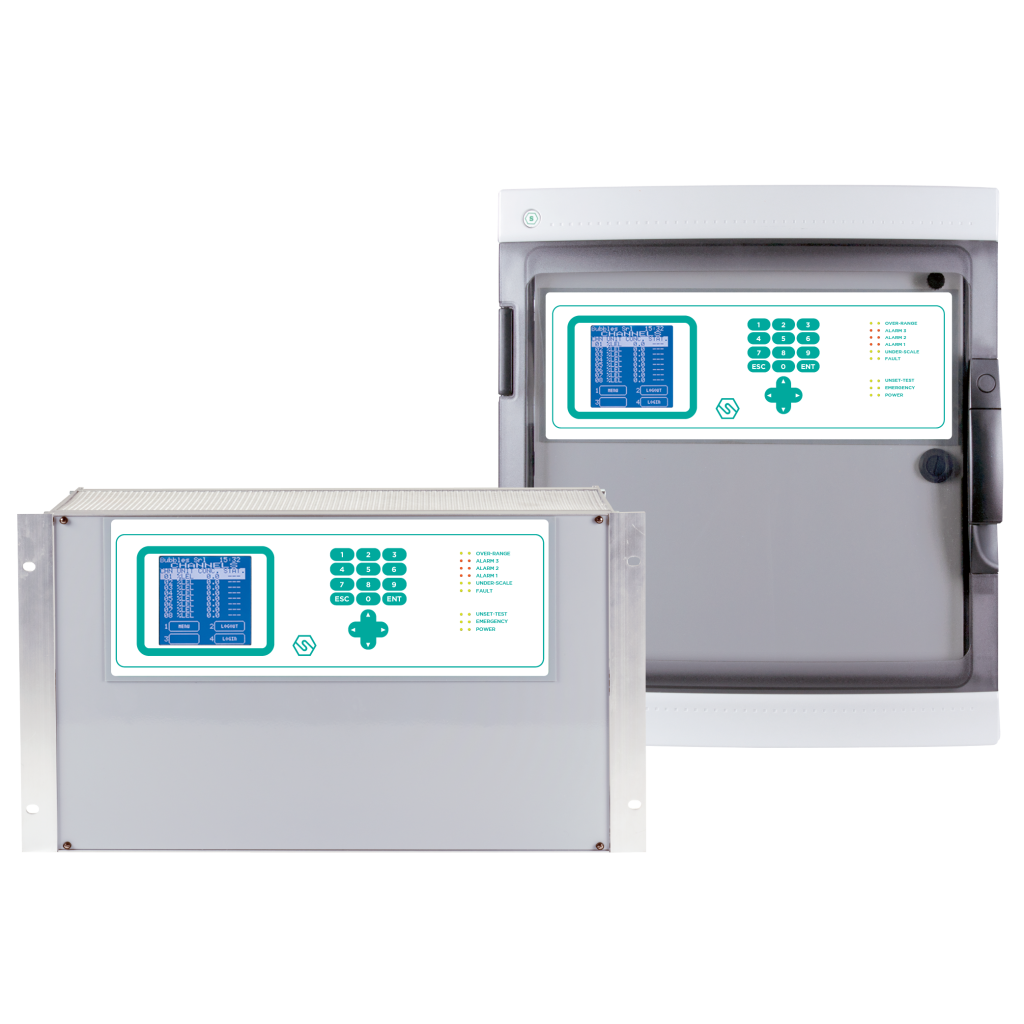
Control Panels
Related INSIGHTS
Want to speak to the experts?
No one understands better than our team just how important the right detection solutions are for you and your site. That’s why we’re always on hand to talk you through your gas detection needs, to ensure you’re equipped with precisely the right tools to keep your people and property safe.
Read about Crowcon’s Privacy and Cookie policy here. If you change your mind, you can unsubscribe at any time